

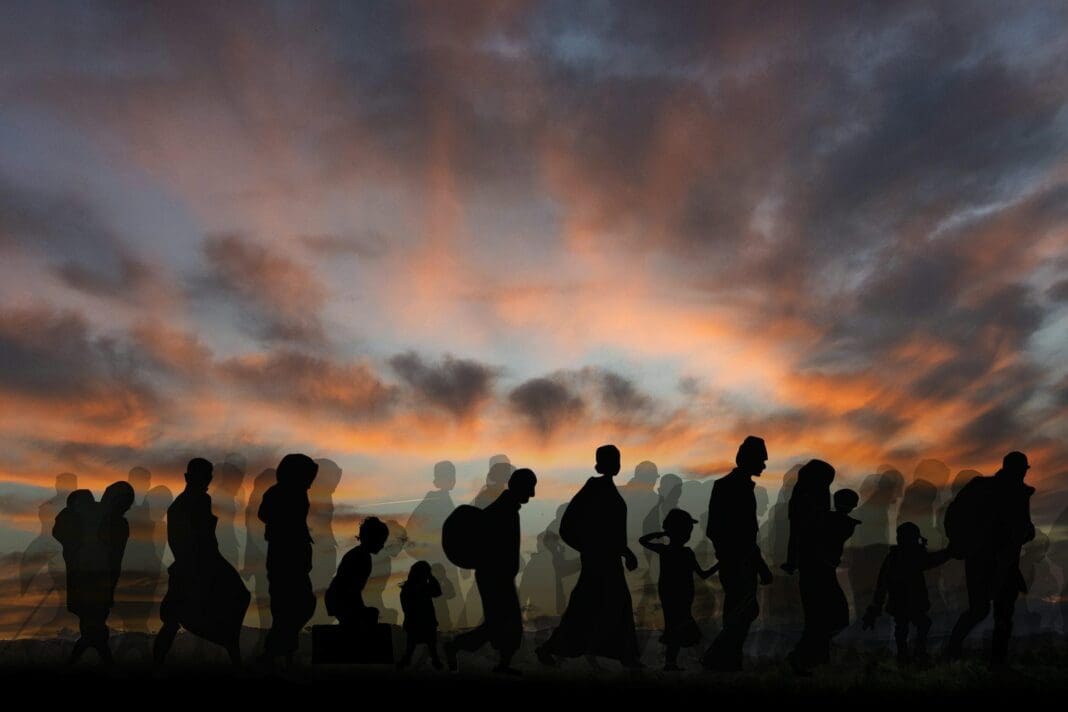
Throughout history, millions of people have experienced widespread violence, persecution and loss. During the Holocaust, 6 million Jewish people were murdered. Beginning in 1619 and through the mid-1800s, 12.5 million African people were forced onto ships during the trans-Atlantic slave trade. These are just two examples of many that have affected communities in ways that last long after the initial experiences.
Such traumas can have lasting consequences for a person’s physical and mental health. Yet, these effects may extend beyond those directly affected. Some can change the psychological, emotional and social well-being of a person’s children and grandchildren.
This phenomenon, known as “intergenerational trauma,” describes how the effects of trauma can extend across generations. This can occur even when descendants have not experienced the original events.
Intergenerational trauma can come from individual experiences, such as childhood abuse or family violence. But researchers have primarily studied it in relation to collective experiences. These can include genocide, enslavement, colonization, war or forced displacement – when unrest or famine force people to leave their homes.
I am a professor of social work. My research with immigrants and refugees looks at how collective and historical traumas shape individual and community well-being across generations. My work also explores how culture helps people cope with hardship, heal and recover together as groups.
Intergenerational trauma gained wider attention in the 1990s. Studies of Holocaust survivors and their children helped bring the issue to light. Researchers in the United States, Europe and Israel studied families affected by persecution, displacement and profound loss. They explored how these events shaped the mental health of descendants who had never lived through them.
Over time, scholars have found multiple relational paths through which the consequences of trauma can extend across generations. For example, fear can shape parenting, and a parent’s silence can make their distress hard to understand. Trauma can also weaken community ties.
Biological changes may also occur through what’s called epigenetics. These changes can affect how cells use genes while leaving the DNA code intact. This may also help explain how the effects of trauma reach later generations.
A study of three generations of Syrian refugee families, for instance, found a link between exposure to wartime violence and chemical marks on DNA. Scientists still don’t know whether parents can pass these marks to their children or if they affect how their children respond to stress.
Recognizing intergenerational trauma helps trace how experiences affect entire communities, not just individuals.
Closely related is the concept of “historical trauma” or “collective trauma.” These describe the cumulative effects of collective experiences, not just one-time events, over time. Examples are colonization, genocide and ongoing discrimination and mistreatment across generations.
For example, researchers have studied how colonization and family separation continue to affect the mental, social and physical health of generations of Indigenous peoples. They have looked at the lasting effects of government policies that forced Indigenous people to adopt the dominant culture. These policies barred people from speaking their own languages and practicing their traditions.
In Canada, for instance, First Nations, Inuit and Métis children were forcibly sent to residential schools between 1831 and 1997. Studies have linked their attendance to psychological distress among descendants.
Likewise, in the U.S. in the 19th and 20th centuries, the federal government operated or supported Native American boarding schools. Research shows a link between fathers’ attendance and chronic health problems in their adult children.
In Australia, researchers have found higher rates of mental health problems among descendants of the “Stolen Generations.” These were Aboriginal and Torres Strait Islander children forcibly removed from their families from the mid-1800s into the 1970s.
Among Black Americans, scholars have shown how the historical legacies of enslavement and racial violence intersect with current experiences of racism. These collective experiences may shape family narratives, cultural identity and psychological well-being across generations.
Many immigrant and refugee communities also experience historical trauma. A review of studies on collective trauma among forced migrants displaced by war, persecution or political violence shows they often navigate the effects of loss and separation long after they move to a new country.
Research has identified parental distress, cultural identity and changing family roles as ways these experiences affect descendants. Similarly, colleagues and I examined previous research that also highlights how these effects can shape the lives of subsequent generations of migrant families.
Across these populations, intergenerational trauma involves more than the passing on of psychological distress within families. When subsequent generations experience discrimination or continued threats to their cultural identity, the consequences of past trauma can intersect with new hardships.
Just as the consequences of trauma can extend beyond the generation that experienced it, so can resilience.
In my work with immigrants and refugees, I have found that intergenerational trauma is neither inevitable nor uniform across communities. Psychological outcomes vary among descendants of trauma survivors. For instance, in one study of adult children of Holocaust survivors, about 1 in 3 had experienced post-traumatic stress disorder if both parents had it. Fewer than 1 in 10 had experienced PTSD if neither parent had it.
Families and communities pass down cultural traditions, stories of survival, collective healing and shared identities too. These can help future generations navigate adversity.
An intergenerational trauma perspective recognizes that healing involves families and communities. It may mean addressing pain within groups and offering mental health care that respects culture. These can be community-based approaches that create opportunities for shared understanding, connection and healing.
Individuals and communities do not need to be defined by the suffering of their ancestors. Rather, the concept of intergenerational traumas helps recognize how past experiences can continue to shape the present. It also acknowledges that these influences do not determine the future.
The experiences of previous generations can leave lasting wounds. But they can also provide foundations for strength, connection and healing.
This article is republished from The Conversation, a nonprofit, independent news organization bringing you facts and trustworthy analysis to help you make sense of our complex world. It was written by: Jaclyn Kirsch, University of Texas at Arlington
Read more: How Native students fought back against abuse and assimilation at US boarding schools Oscars 2022: Disney’s ‘Encanto’ shows healing from intergenerational trauma War’s physical toll can last for generations, as it has for the children of the Vietnam War
Jaclyn Kirsch does not work for, consult, own shares in or receive funding from any company or organization that would benefit from this article, and has disclosed no relevant affiliations beyond their academic appointment.