
Curious Kids is a series for children of all ages. If you have a question you’d like an expert to answer, send it to [email protected].
What would my vision look like if I had one eye in front and another in back? – Mohibul, age 18, India
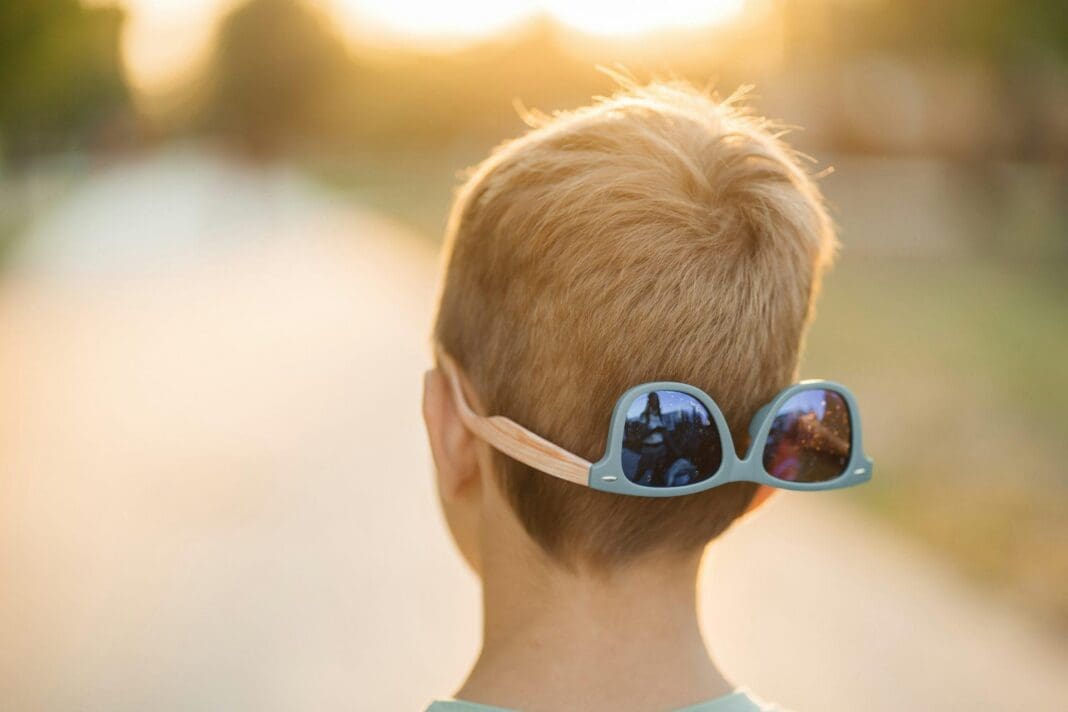
Have you ever tried to quickly grab that last cookie while your mother’s back was turned? Even without turning around, I bet she noticed. As the saying goes, moms can sometimes seem like they have eyes on the back of their heads.
What would their vision be like if they really did have one eye in front and one eye in back?
As an optometrist, I work daily to make sure my patients’ eyes are seeing well and partnering with one another to provide a single, clear image to the brain. As a clinical professor, I help my students understand how binocular vision – the use of two eyes – works. Sometimes, this may include using animal examples to illustrate how important it is for humans to have two eyes that face in the same direction.
As you can see by looking at yourself in the mirror, our two eyes sit side by side on the front of our heads. Since our eyes are a couple of inches apart, each eye has a slightly different perspective on the world around you.
There’s a good bit of overlap between what each eye sees, though. Close one eye at a time – you should still be able to see the words in the middle of the page with each eye individually. The words on the left side, though, might only be clear when your left eye is open, and with the same true for the right side and the right eye.
Someone with normal side vision can see about 180 degrees around them while looking straight ahead. In other words, your view of the world should be everything directly in front of you stretching back to roughly your ears — about half of a circle. This whole area that you can see at once is called your field of vision. About 70% of that field is an overlap between the images captured by each eye.
Next, your brain takes these images from each eye and combines the overlapping portion into one 3D image. The ability to see in three dimensions is called stereopsis, or depth perception.
This is how you can tell which objects in front of you are closer or farther away. Depth perception allows you to better navigate around objects and is important for hand-eye coordination. Without 3D vision, it would be hard to perform all the complicated tasks that people do in their daily lives – writing, reading, cooking, playing sports, driving and so much more.
Animals have evolved to have different eye placements based on the jobs they need their eyes to do.
For example, predators – animals that need to hunt other animals for food to survive – will have eyes on the front of their heads, just like us. This setup allows for depth perception. They will be able to more accurately scan specific areas and pick out animals that may be hiding.
Predators also tend to have more crystal clear vision and better contrast sensitivity, meaning they’re able to tell the difference between an object and its background. All of these adaptations help them hunt.
In contrast, prey animals’ job is to detect and get away from predators that are trying to eat them. They have eyes closer to the sides of their heads, which increases their side vision. This larger field of view allows them to scan a wider area to watch for incoming danger. Of note: Their vision isn’t as sharp as predators’.
A good example of a predator-prey relationship is a fox and a rabbit. The fox has forward-facing eyes to help it find and hunt the rabbit. The rabbit has eyes on the side of its head to help it scan and escape from the fox.
An owl is an example of an animal that gets the best of both worlds. Owls are predators whose eyes are positioned on the front of their heads, giving them excellent depth perception. Because of how their eyes are shaped, though, they can’t move them in their eye sockets. Instead, they have adapted to have very mobile necks so they can turn their head to be facing completely backward. This gives them a much wider field of vision than most animals with forward-facing eyes, while preserving their depth perception.
So what would it be like for us to have one eye in front and one in back?
This setup would be most similar to a prey animal. You’d have a wide field of view and be able to see almost all of your surroundings – forward and behind at the same time.
But the cost would be loss of depth perception. With eyes on opposite sides of your head, the images they capture would not overlap, causing your vision to be less three-dimensional.
Also, if the switch from side by side to one-front/one-back happened instantaneously, your brain would get confused about how to interpret the images delivered from each eye, since the setup would be quite different from what you were used to.
In my patients, especially kids, my goal is to make sure their vision is clear and their eyes are working together to achieve depth perception.
If your eyes ever have trouble pointing in the same direction, or you notice double vision or eyestrain when reading, headaches, or other visual symptoms, visit an eye care specialist to check your eyes. They can make sure you are using your eyes the way evolution intended – two eyes in the front of the head working together for clear, binocular vision. It’s important to keep your forward-facing eyes healthy – especially if you’re a mom who needs to watch out for cookie bandits.
Hello, curious kids! Do you have a question you’d like an expert to answer? Ask an adult to send your question to [email protected]. Please tell us your name, age and the city where you live.
And since curiosity has no age limit – adults, let us know what you’re wondering, too. We won’t be able to answer every question, but we will do our best.
This article is republished from The Conversation, a nonprofit, independent news organization bringing you facts and trustworthy analysis to help you make sense of our complex world. It was written by: Abigail Witmer, The Ohio State University
Read more: Why do cats’ eyes glow in the dark? Do dogs really see in just black and white? How do my eyes adjust to the dark and how long does it take?
Abigail Witmer does not work for, consult, own shares in or receive funding from any company or organization that would benefit from this article, and has disclosed no relevant affiliations beyond their academic appointment.