

In 1997, I was one of relatively few tourists in Detroit.
Well before #vanlife was a hashtag, I left my home state of California and drove around the country for five months living in a 1982 Volkswagen Vanagon. Though I had few planned stops, Detroit was on my itinerary because I was a raver and I knew that techno originated in Detroit.
After my trip, I applied to grad school at the University of Michigan with the plan to make Detroit electronic music my research topic. I moved from Ann Arbor to Detroit during grad school. Since that time, I have been not only an ethnographer of Detroit techno and house, but also a committed city resident, property owner and now parent of a high school student in a Detroit public school.
A lot has changed since I moved to Detroit to study its music scene, including the growth of Movement Festival, a free electronic dance music festival, which started in 2000.
It is now ticketed and draws 90,000 attendees, a mix of locals and tourists, over Memorial Day weekend while the city fills up with others who skip the festival but attend day parties and after-parties.
Longtime Detroiters who never left don’t consider the city’s revitalization a “comeback” because the things that make Detroit special – community and creativity – have been here all along. But this growth means today’s techno tourists encounter a robust tourism infrastructure quite unlike my early visit.
Some techno tourists don’t only visit during Movement weekend. By regularly visiting Detroit, they achieve recognition and a limited kind of belonging that helps maintain the importance of Detroit to techno’s history.
A simple local or tourist binary doesn’t capture how belonging works in cultural scenes. That belonging is gradual and never fully guaranteed.
Techno tourists, and especially repeat techno tourists, arrived in Detroit in the 1990s and early 2000s, despite decades of disinvestment and governmental neglect in the city. With white flight shifting economic investment to the suburbs, where Black Detroiters encountered racial discrimination, belonging for Black Detroiters in the city became critical. Informal economic activity, self-reliance and community connection were vital lifelines.
The music scenes that would eventually produce techno grew out of all three.
Black Detroiters living in an economically depressed 1980s Detroit imagined a sonic future that was inclusive and equitable. Pioneers Juan Atkins, Eddie Fowlkes, Derrick May and Kevin Saunderson were inspired by the breadth of genres on the radio and in local clubs.
Saunderson, a founding figure of Detroit techno, has argued that music industry gatekeepers and promoters have often limited opportunities for Black artists, even within a genre they helped create. Electronic dance music scholars have noted that countercultural scenes have shifted into a global industry, reshaping or erasing local meanings in favor of commercialization.
Tourists are drawn to Detroit techno because it offers something increasingly rare: a living scene where the creators and their communities are still present and active. This scene is sustained by locals.
Detroiters, with the originators of Chicago House, built one of the foundations for all electronic dance music out of a besieged urban place, through grit and the creativity of Black musicians.
Locals are protective of their scene. Taglines, like the one used by Underground Resistance, “for those who know,” reflect a long-running underground scene that has had to deal with bootleggers trying to profit off what they created.
Locals create authenticity but do not necessarily control how that authenticity circulates or is monetized through tourism.
A first- or second-time tourist experience during Movement weekend may include the festival in Hart Plaza and various day and after-parties that turn Detroit into a 24-hour party destination.
While Movement, and especially its earlier versions, grew out of the Detroit scene, it has evolved into a festival shaped more by the global festival industry than by its local origins. There are, however, moments when the locals try to introduce a bit of the authentic Detroit: homegrown music, dance floors that include longtime Detroiters, and experiences outside of the city’s downtown entertainment district.
In 2002, for example, Underground Resistance, an important foundational Detroit techno collective, decided to throw a cabaret.
A cabaret was an informal party held in a hall. Partygoers brought their own booze, and DJs usually played R&B, hip-hop and ghettotech.
Underground Resistance wanted tourists to experience Detroit in its most local form in order to understand the cultural world techno came from. The party showcased highly skilled neighborhood DJs who weren’t internationally known. People responded. Tourists from Japan and Germany came to the cabaret. Underground Resistance successfully moved visitors beyond the festival and into the local culture that shaped the music.
The spirit of that early cabaret lives on. Every festival weekend, Moodymann, an internationally recognized Detroit electronic artist, alternates between hosting a roller-skating party, called Soul Skate, and a backyard barbecue.
In addition to DJs, these events feature funk and soul performers who are influential in DJing culture, such as Whodini, a pioneering hip-hop group, and the Brides of Funkenstein, a vocal group associated with George Clinton’s Parliament-Funkadelic.
Community-centered events are not the biggest moneymakers of Movement festival weekend. The parties with the most ticket sales and highest prices, which can run as high as US$80 or more for an after-party, are often put on by out-of-town promoters. Many locals can’t afford the high ticket prices, and others choose not to attend, leaving Movement weekend dance floors filled with tourists and lacking a Detroit feel.
Because of the influx of promotion teams from outside of Detroit, sometimes when I go out on festival weekend I actually feel like I have left Detroit, as if I have become a tourist in my own town.
When I was a raver in California I had a friend named Fred. After I moved to Detroit in 1998, I started to see him around, and I’d try to introduce him to a Detroiter: “Meet Fred. I knew him back home before I moved here!” And the Detroiter would be like: “Yeah I know Fred.”
He’d been coming to Detroit for years before I moved here. At that time, they knew him better than they knew me.
Fans like Fred blur the boundary between insider and outsider, accumulating subcultural knowledge over time, but without having the roots of a local. They are recognized, but not fully of the place.
The repeat tourist has played an important role in Detroit techno culture. The music has been able to spread around the globe but stay connected to the people who created it, due in part to repeat tourists or fans who aren’t able to travel to Detroit but care enough to know the origins of techno. Music culture can easily be divorced from its originators, so the fan who digs deeper than a casual tourist is an important conduit for a shared culture that is respectful of roots.
We can’t all move to the places of our passions. But if we are repeat tourists there, what do we owe the locals who actually call them home?
Tec-Troit is an annual electronic music festival that is Detroit-focused, small and free to attend. It attracts locals and some tourists.
Started in 2011, Tec-Troit is “a way to showcase local, overlooked Detroit electronic musicians” and strengthen the city’s connections to its techno roots, organizers say. Running June 26-28, this year’s festival follows tradition with an almost all-local lineup, with the exception of out-of-town headliner A Guy Called Gerald, who’s playing with Detroit’s Mike Banks, the founder of Underground Resistance.
In an interview with DEQ Quarterly, Raul Rocha, Tec-Troit’s founder, said that part of the inspiration was the difference that he noticed when Movement Festival shifted to paid entrance. Rocha noted that a free festival encourages people to discover the music. Festival attendance could turn someone “into a DJ,” he said. “It might produce a dancer. They might be a part of the community.”
Tec-Troit includes DJ workshops, dance courses and intentional outreach to Detroit youth to nurture Detroit’s next generation of artists.
Unlike Movement with its steep entrance fees and highly paid headliners, Tec-Troit is more like a family reunion.
Tec-Troit reconnects locals, and also repeat tourists, with the roots of the music, but its performers won’t earn as much as internationally traveling DJs headlining other bigger festivals. Though standing on the foundation built by Black Detroiters and Chicagoans, most of the highest paid DJs are white.
In my first years in Detroit, as a grad student, I asked Underground Resistance if I could research them. They said no, explaining that people came to Detroit, got knowledge, and then left without really giving back to Detroit.
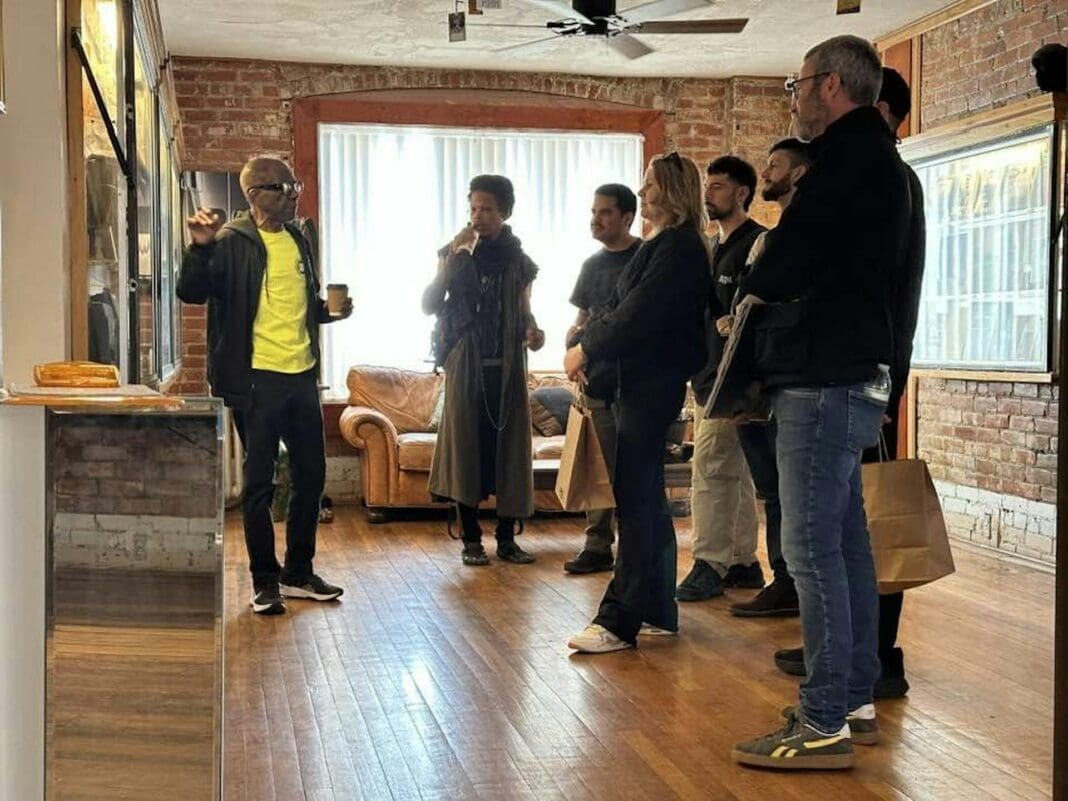
But I stayed and was eventually invited in to help curate, with Bridgette Banks, Exhibit 3000, the world’s first electronic dance music museum. You can move from techno tourist to local. But it takes time, intention and commitment.
This article is republished from The Conversation, a nonprofit, independent news organization bringing you facts and trustworthy analysis to help you make sense of our complex world. It was written by: Carla Vecchiola, University of Michigan-Dearborn
Read more: How Detroit techno is preserving the city’s beating heart in the face of gentrification The revamped hiking trail regenerating an Italian region blighted by mafia stereotypes From breakbeats to the dance floor: How hip‑hop and house revolutionized music and culture
Carla Vecchiola serves on the board of directors of Exhibit 3000.