

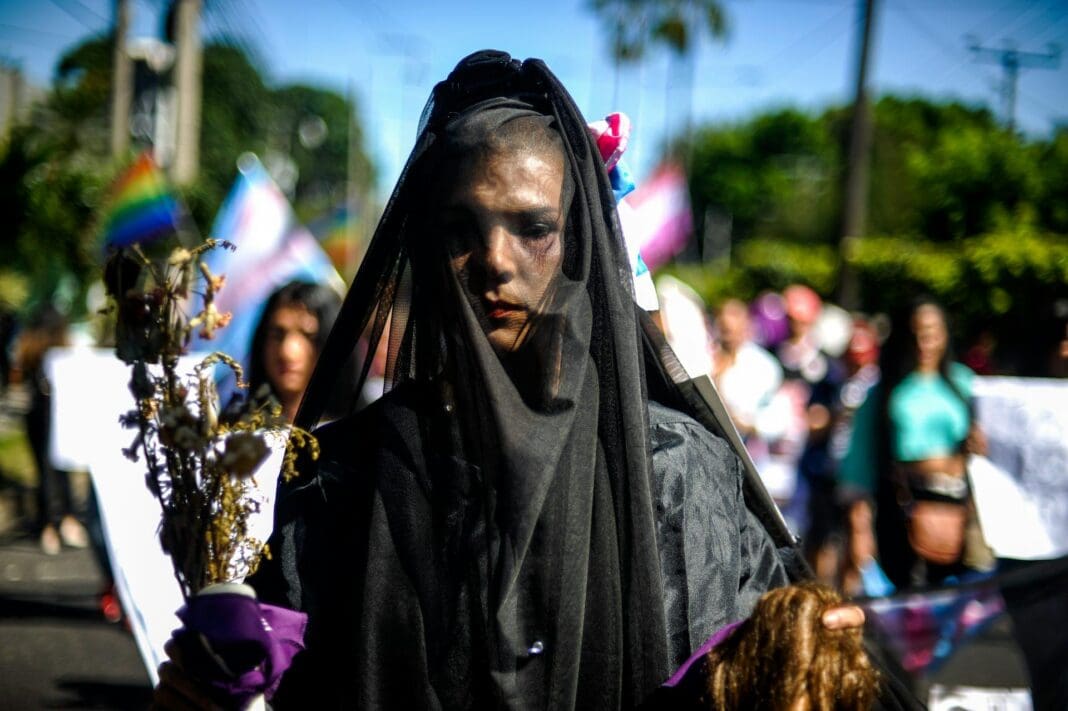
Aided by the Trump administration, debate over gender identity has gone from being a touchstone of domestic culture wars to infiltrating the work of international groups – including those designed to protect vulnerable communities.
In March 2026, at the 70th session of the U.N. Commission on the Status of Women, a U.S. delegate submitted a draft resolution to define gender in alignment with what the representative described as “its ordinary, generally accepted usage, as referring to men and women.”
While this may seem like a relatively benign or procedural intervention, the proposed resolution invited significant blowback from other delegates. Sweden’s representative framed it as an attempt “to turn back the clock 30 to 40 years.” The resolution ultimately failed after being blocked from going to a vote by Belgium, on behalf of the EU.
As an expert on gender, sexuality and conflict, I see the latest dispute over terminology at a key U.N. conference as reflecting a wider fight among the international community that has rumbled on for months. I believe that contest, moreover, threatens to undermine critical work to serve survivors of violence across the world.
In recent years, some international organizations, nongovernmental organizations and countries have moved to understand gender beyond equating it with biological sex.
This had included expanding its meaning within the peace and security sector.
The U.N. Refugee Agency, for example, now follows an “age, gender and diversity” policy that defines gender as “socially constructed roles for women and men, which are often central to the way people define themselves and are defined by others.” In other words, trans women are women, and trans men are men.
The International Criminal Court takes a similar stance in its approach to gender-based crimes.
Both bodies contend that this gender lens is important for understanding the full scope of experiences and vulnerabilities not just of women and girls, but also LGBTQ+ individuals and men and boys during conflict.
While heavily contested by some nations, this approach departs from a previous implicit assumption that only women are targeted for sexual violence in conflict – and that these women are all cisgender.
Despite the normalization of more inclusive approaches to gender, the pushback has recently gained a lot of traction, aided in part by the reversal of the U.S. from its previous stance under the Biden administration.
Only two months into the Trump administration, the U.S. pulled out of a working group of nations on LGBTQ+ concerns. Then, in January 2026, it withdrew from a slew of international bodies it claimed were “often dominated by progressive ideology and detached from national interests,” including U.N. Women. Most recently, the administration has called on FIFA, soccer’s international governing body, to change its policy on trans athletes.
It isn’t just the U.S. contesting inclusive language, however. In June 2025, the U.N. special rapporteur on violence against women and girls, Reem Alsalem, published a report suggesting that gender-neutral language and the recognition of gender identity in policy erases the category of what it refers to as “sex-based discrimination” against women and girls.
The draft resolution also argues that “gender identity theory” contributes to violence against women by advancing “stereotypes” and “sexist norms about how women should dress and behave.”
In effect, the report introduces a far narrower understanding of violence against women – and “gender” writ large – which notably excludes trans women.
Human rights professionals and NGOs, including Amnesty International and various feminist organizations, submitted a response to the draft version of the report claiming that its adoption of the term “sex-based violence … undermines decades of feminist advocacy, scientific evidence and legal advances.” Moreover, it “risks excluding vulnerable populations from essential protections.”
Nations were unsurprisingly split in their response, with some offering praise for the report’s approach and others raising concerns. Such was the feeling aroused by the special rapporteur’s position that in late 2025, Australia’s commissioner on sex inequality asked internally about potentially blocking Alsalem’s reappointment to her post.
Debates over language are familiar to those working in international crisis work, and some important tensions remain unaddressed. I argue, though, that a narrow interpretation of “gender” based on sex assigned at birth risks missing harms against certain groups.
Research on conflict and humanitarian contexts suggests that expansive conceptualizations of gender can better reveal dimensions of harms experienced by people who are not cisgender, heterosexual women or girls.
For example, my research with UMass Amherst’s Charli Carpenter demonstrates that a gender lens shows how Ukraine’s travel ban on “battle-aged” civilian men places these men, their families, trans women and nonbinary people misidentified as men at undue risk. In this case, it’s not biological sex but beliefs about gender – for example, the characterization of men as warriors and protectors – that create these vulnerabilities.
Similarly, understanding wartime violence against gender and sexual minorities as gender-based highlights how these groups can be singled out by state and armed groups for transgressing sanctioned gender norms.
However, there are also trade-offs to more expansive approaches to gender, as evidenced by my research on changing global approaches to wartime sexual violence against men and boys.
Some practitioners I spoke with expressed concern that the inclusion of violence against men and boys under the rubric of gender-based violence would detract from the disproportionate impact and structural roots of violence against women.
This is particularly troubling at moment of increasingly limited resources earmarked to serve conflict- and other crisis-affected women and girls, as well as rising backlash against women’s rights.
The resolution brought forward by the U.S., as well as the special rapporteur’s report, should, I believe, be understood in the context of a wider anti-trans backlash.
This backlash – which involves diverse groups, from religious conservatives to even some women’s rights advocates – mobilizes fears about public safety, marriage and the family structure.
Some of the backlash is predicated on harmful stereotypes about trans women that portray them as predatory opportunists.
While there is no evidence of this being a common trend, such narratives permeate the special rapporteur’s report. For example, the document includes claims that “males who identify as women retain a male pattern of criminality” and that lesbians get “coerced into sexual relations with males who identify as women.”
The report also constructs hypothetical scenarios about trans-inclusive spaces as a threat to cisgender women’s safety, such as the absence of “single-sex” washrooms in refugee camps “often leads to women avoiding using mixed-sex facilities.”
Significantly, this latter claim is embedded within partial truths. There is evidence that women’s vulnerability increases when refugee camps don’t have women’s washrooms, when they are placed too close to men’s washrooms or are in remote, unlit locations.
But there is no evidence in the draft report or elsewhere that the threat comes from trans women and not men.
In fact, research suggests that LGBTQ+ refugees and detained migrants experience unique and exacerbated vulnerabilities to sexual harassment, violence and exploitation.
Moreover, in conflict and humanitarian situations, violence against LGBTQ+ people shares some key root causes driving violence against women and girls, such as restrictive gender norms and militarism.
The agenda to prevent violence against women is, I would argue, increasingly co-opted by transphobia. Ultimately, this distracts from the struggles experienced by all those marginalized on the basis of gender.
This article is republished from The Conversation, a nonprofit, independent news organization bringing you facts and trustworthy analysis to help you make sense of our complex world. It was written by: Jenna Norosky, Binghamton University, State University of New York
Read more: Trans joy and family bonds are big parts of the transgender experience lost in media coverage and anti‑trans legislation Transgender people of color face unique challenges as gender discrimination and racism intersect US ceasefire with Iran: What’s next? A former diplomat explains 3 possible scenarios
Jenna Norosky received funding from the American Political Science Association to conduct research referenced in this article.